

WBPI: CAN YOU GIVE AN ASSESSMENT OF THE CURRENT POSITION AND MARKET DYNAMICS OF THE JAPANESE WOODBASED PANELS SECTOR.
JFPMA: In recent years, the supply of wood panels (particleboard, MDF, OSB) in Japan has been declining by about 5-10% each year due to the annual decline in housing supply, which is the main market for wood panels, and the industry is in a difficult situation due to the impact of rising costs for raw material procurement, energy procurement, and transportation. There is a noticeable trend among customers in the construction sector to seek new opportunities from the shrinking housing market into the non-housing building market.
WBPI: WHAT HAS BEEN THE MANUFACTURING OUTPUT & INSTALLED CAPACITY DEVELOPMENT IN JAPAN FOR THE MAIN WOOD-BASED PANELS PRODUCTS? WHAT NEW MILLS OR LARGE UPGRADING DEVELOPMENTS HAVE TAKEN PLACE?
JFPMA: The trends in domestic Japanese production is shown in JFPMA statistics:
2022
- Particleboard: 984,794m3
- Hardboard: 40,546m3
- MDF: 394,410m3
- Insulation board: 287,879m3
*MDF imported to Japan from overseas JFPMA member factories: 552,291m3
2023
- Particleboard: 935,166m3
- Hardboard: 37,038m3
- MDF: 327,988m3
- Insulation board: 255,100m3
*MDF imported to Japan from overseas JFPMA member factories: 459,168m3
2024
- Particleboard: 884,272m3
- Hardboard: 32,698m3
- MDF: 303,596m3
- Insulation board: 233,009m3
*MDF imported to Japan from overseas JFPMA member factories: 428,021m3
2025
- Particleboard: 898,282m3
- Hardboard: 30,510m3
- MDF: 321,865m3
- Insulation board: 221,486m3
*MDF imported to Japan from overseas JFPMA member factories: 434,441m3
Japan’s domestic wood panel production capacity increased by approximately 250,000m3 in 2022 with the opening of the ENboard particleboard facility in Shizuoka Prefecture.
However, due to the closure of three particleboard production facilities to date [since 2022), the increase in production capacity in 2025 compared to 2022 is approximately 100,000m3. The three particleboard factories that closed were Eidai’s Yamaguchi factory (closed in 2022), Eidai’s Fukui factory (closed in 2023), and the Seihoku Group’s Akita factory (closed in 2024).
We have no information on future new factory openings or large-scale renovations at this current time.
WBPI: HOW IS THE JAPANESE ECONOMY DOING GENERALLY IN TERMS OF GDP, EMPLOYMENT LEVELS AND BUSINESS CONFIDENCE?
JFPMA: Overall, the Japanese economy is on a moderate recovery path, with relatively stable GDP growth, tight labour market conditions, and gradually improving business confidence, although there are still differences between sectors. Japan’s real GDP growth has been positive but modest in recent years. The economy is supported mainly by domestic demand, including private consumption and corporate investment. At the same time, slower global growth, exchange rate volatility and higher energy and raw material costs continue to pose risks and uncertainties. Japan remains one of the world’s largest economies in terms of GDP, but its potential growth rate is relatively low due to structural factors such as an aging and shrinking population.
The employment situation is very tight, and overall labour market conditions are strong. The unemployment rate is at a low level (around the mid‑2% range), reflecting not weak demand but rather labour shortages in many sectors. Employment has been increasing in services, information and communications, and medical and welfare, while some traditional manufacturing sectors are facing both structural changes and recruitment difficulties.
For many companies, including those in the wood-based panel industry, securing and training skilled workers is an important management issue.
Business sentiment is on a gradual improving trend, but remains cautious. Large companies generally report stable or slightly improving business conditions, supported by domestic demand and, in some cases, by exports. However, many firms are still careful about future investment due to rising costs, geopolitical risks, and uncertain overseas demand, particularly in China and some other markets.
In summary, business confidence is recovering, but companies are paying close attention to cost trends (including energy and raw materials), exchange rates, and global economic developments. Japan currently has modest GDP growth, very low unemployment, and cautiously improving business confidence.
At the same time, it faces structural challenges such as demographic change and labour shortages, which also affect manufacturing industries including woodbased panel production.
WBPI: HOW MANY MANUFACTURERS OF MDF & PB ARE THERE CURRENTLY IN THE COUNTRY AND WHAT DOES THE TYPICAL OWNERSHIP MODEL LOOK LIKE.
JFPMA: Currently, there are three MDF manufacturers in Japan, two of which are publicly listed. There are eight PB manufacturers, two of which are publicly listed. The rest are unlisted. In addition to the three companies mentioned above, two other companies supply MDF manufactured at their overseas subsidiaries to Japan.
WBPI: HOW IS THE SITUATION FOR WOOD RAW MATERIAL SUPPLY, AS WELL AS RESIN AND ENERGY COSTS?.
JFPMA: Japan’s domestic wood raw material supply is 95% domestically produced and 5% imported, with 90% of domestic raw materials being recycled and 10% being virgin.
Because Japan has a large number of wooden houses, the reuse of demolition materials from these buildings is progressing. However, in recent years, the number of housing starts has decreased, resulting in a decrease in building demolition associated with rebuilding.
This has also led to a decrease in the supply of demolition materials, making it increasingly difficult to procure recycled wood. Furthermore, virgin wood also originates from low-quality materials unsuitable for sawing or waste wood left in forests.
Raw material costs such as resin and energy are also rising, and although there are differences even among JFPMA members, it appears that costs will generally increase by more than 20% compared to 2022.
WBPI: IN MANY AREAS OF THE WORLD THERE IS AN INCREASING EMPHASIS ON LOW-CARBON & SUSTAINABILITY IN PRODUCT SELECTION. HOW HAS THE JAPANESE WOOD-BASED PANELS INDUSTRY RESPONDED TO THIS TREND?
JFPMA: In Japan, interest in low carbon and sustainability is growing when selecting products. The wood board industry has also promoted the environmental benefits of its products, primarily from the perspective of long-term carbon storage. However, after the building materials and wood products that stored carbon are discarded, the only products that use them as raw materials to further prolong carbon storage are particleboard and fibreboard, and unfortunately, the environmental benefits of these products have not been widely recognized in Japan.
WBPI: WHAT ARE THE CUSTOMER AND PRODUCT TRENDS YOU ARE SEEING IN THE JAPANESE DOMESTIC MARKET IN TERMS OF FINISHES, COLOURS AND BOARD TYPES? IS THERE TYPICALLY MUCH CHANGE FROM YEAR TO YEAR IN DESIGN TRENDS FROM ARCHITECTS, INTERIOR DESIGNERS AND CONSUMERS?
JFPMA: Customer and product trends in finishes, colours and board types:
1. Finishes: There is a strong shift toward matte and “natural” surfaces. In both residential and non‑residential interiors, there has been a clear shift away from high‑gloss finishes toward matte and super‑matte surfaces. Products with anti‑fingerprint and easy‑to‑clean properties are increasingly requested, especially kitchens, doors and built‑in furniture.
Texture and realistic wood appearance: For surfaced particleboard and MDF (LPM and decorative sheet‑laminated boards), synchronised embossing – where the embossing follows the printed wood grain – is now widely adopted in mid‑ to high‑end furniture and interior components. This supports the strong Japanese preference for a natural, authentic wood look.
Functional finishes (hygiene and durability): Reflecting higher hygiene awareness after the pandemic, there is rising interest in antibacterial and antiviral surfaces, as well as scratch‑ and stain‑resistant finishes. These are particularly important in kitchens, public facilities and commercial interiors.
2. Colours: Dominance of wood grain decors: Wood grain designs remain the clear majority in the Japanese market. Oak and walnut continue to be the key standard décors. At the same time, lighter and desaturated tones such as white oak, ash and “greige” (grey + beige) have gained share in recent years.
Calm, neutral palettes: For large interior elements (doors, storage fronts, wall panels, etc.), customers tend to prefer calm, neutral colours such as white, off‑white, light beige and light grey that can co-ordinate easily and remain acceptable over long periods of time.
Accent colours in modern interiors: In kitchens and some commercial interiors, dark grey, charcoal and black are increasingly used as accent colours in combination with wood grains. This is often seen in “Japandi” – influenced designs, which combine Japanese minimalism with Scandinavian style and have been highlighted in Japanese interior design exhibitions in recent years.
3. Board types and typical applications Particleboard (PB): Particleboard is widely used as a core material for kitchen cabinets, built‑in storage, system furniture and office furniture, usually surfaced with low‑pressure melamine
(LPM) or decorative films: Demand is supported by the need for efficient storage and by renovation in the housing sector.
Medium Density Fiberboard (MDF) – MDF is used where smooth surfaces and precise machining are required, such as interior doors, mouldings, wall panels, wrapped components and fixture parts. Partnerships between Japanese trading companies and overseas MDF producers help ensure a stable supply of MDF to the Japanese market.
Insulation board (IB): Woodfibre insulation boards have some distinctive niche uses in Japan. A well‑known example is their use as the core material for traditional “tatami” mats, in addition to roles in insulation and sound‑absorbing applications.
Hardboard: Hardboard is mainly used for back panels of furniture, drawer bottoms, partitions and various backing boards, where thin, dense and cost‑effective material is required.
4. Speed of change in design trends: There has been a gradual evolution rather than rapid year‑to‑year change. In general, the Japanese housing and interior market does not see dramatic changes in design trends every year. Japanese consumers place strong value on timeless, simple and understated designs that will remain suitable for 10–20 years, especially for fixed interior elements made with wood‑based panels.
Japanese architects and interior designers follow international trends – for example, those presented at major trade fairs and “Interior Lifestyle” shows in Tokyo – and are very aware of movements such as Japandi style. However, such influences are introduced gradually, and adapted to Japanese lifestyles, building regulations and relatively compact living spaces. This results in steady, incremental changes (e.g. from darker to lighter wood tones, from glossy to matte finishes), rather than abrupt shifts.
Consumers are increasingly exposed to new styles via social media and online platforms, which brings in new ideas. Nevertheless, when it comes to permanent interior components (doors, flooring, built‑in furniture), they still tend to select natural wood‑like décors and neutral colours that are less affected by short‑term fashion cycles.
In summary, the Japanese market is characterised by stable and enduring preferences for wood grain décors, matte and natural‑looking finishes, and functional surfaces, while design trends change slowly and gradually rather than sharply from year to year.
WBPI: IS THE TECHNOLOGY USED BY PANEL MILLS FOR PRODUCTION GENERALLY SOURCED FROM THE ASIAN MARKET, OR FROM EUROPE, OR A COMBINATION OF BOTH. HOW HAS PANEL PRODUCTION DEVELOPED OVER THE YEARS – IS IT MAINLY CONTINUOUS PRODUCTION LINES NOW OR ARE SOME MULTI-OPENING LINES STILL IN EXISTENCE.
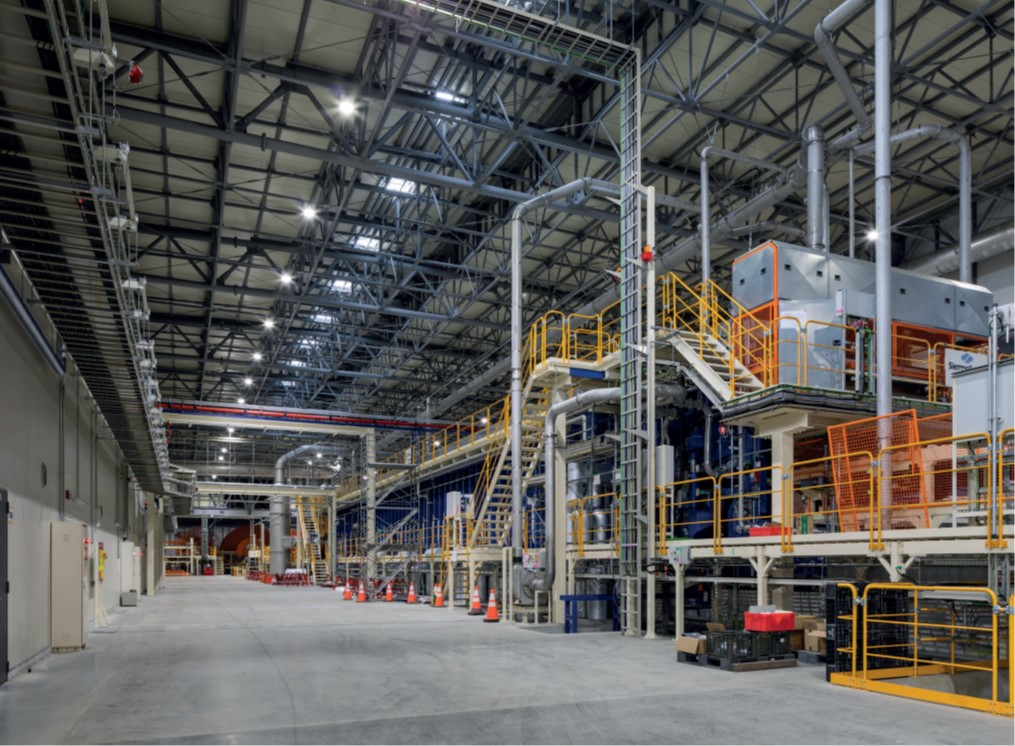
JFPMA: The production technology used in panel factories in Japan is generally imported from Europe. Before the establishment of EN Board in 2022, new production lines were rarely built, and panel production continued by modifying existing lines. Even today, both continuous production lines and multiopening lines exist.

WBPI: WHAT DO YOU SEE AS THE MAIN OPPORTUNITIES AND CHALLENGES FOR THE INDUSTRY IN 2026 AND THE YEARS AHEAD?
JFPMA: In order to achieve a carbon-neutral society by 2050, Japan urgently needs to decarbonize the building sector, which accounts for approximately 40% of the country’s total CO2 emissions. Approximately one-quarter of these emissions are embodied carbon (CO2) emissions from the material manufacturing, construction, use (materials-related), and demolition stages. Therefore, the country has decided to promote the reduction of not only operational carbon (CO2) emissions from the use stage (heat, water, and electricity), but also life cycle carbon (CO2) emissions, which combine embodied and operational carbon. This is in line with policy discussions among OECD member countries. Building life cycle carbon assessment is scheduled to be institutionalized from 2028. Therefore, it is required to develop CO2 emissions intensity for building materials and equipment, which are necessary for building life cycle carbon assessment. With regard to particleboard and MDF wood boards, national policy now requires that the development of CO2 and other emissions intensity data for major product categories be completed to the extent possible by fiscal year 2027, and as an industry we recognize that responding to this represents both our greatest opportunity and challenge. Since last year, JFPMA has been working with its members to obtain the industry-representative EPD (Environmental Product Declaration) certification for wood boards in order to develop CO2 and other emissions intensity data.


