

In Kagawa Prefecture on the northeast side of Shikoku Island in southern Japan, a long-established Japanese wood product manufacturing company is drawing on its experience as it moves forward with a new phase of growth.
Established in 1942 in Takamatsu City as Kagawa Plywood Industry Co Ltd, the business started with the aim of selling plywood.
Originally, its wood products became very important for the post-war reconstruction efforts in Japan. A lot of sawmills, logging operations and wood product manufacturing enterprises grew up around this time.
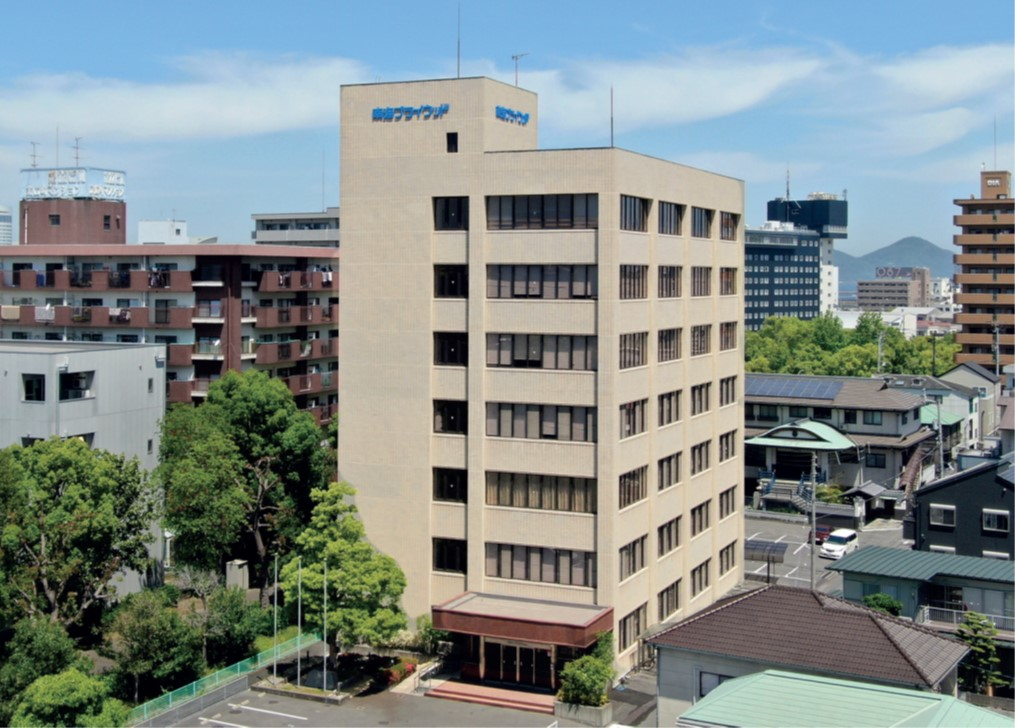
In 1955, looking toward long-term growth, the newly named Nankai Plywood was formed with a mission to grow. Since then, it has been developing, manufacturing, and marketing plywood and other products that contribute to creating comfortable and enriching living environments.
Nankai’s link with its origins remain – its global head office is still based in Takamatsu City. An R&D centre and a warehouse/ distribution operation are also based in Takamatsu.
But growth and diversification have been features of the company’s development in recent decades. In response to changing value-added and targeted offering.
Coupled with the Indonesian operations, Nankai has made two acquisitions in France – the first being the Rolpin plywood manufacturing business in 2014 –and the second in 2025 when it acquired another French plywood manufacturer – Joubert – expanding its global footprint and route to market. More than 1,800 employees are now employed worldwide.
NANKAI EXPANSION
Nankai Plywood is listed on the Tokyo Stock Exchange and its most recent set of annual financial accounts – covering the period ended March 31, 2025 – show a turnover of €136.5m (2024: €130m) and pre-tax profit was €9.9m (2024: €5.4m). These figures do not yet include the Joubert business – which has a €70m annual turnover.
Ryohei Oshima, Nankai Plywood European market account manager, explained to WBPI that 2024 was a more difficult trading year – a common experience for companies globally. But he said Nankai had a good Q3, 2025 and is optimistic on business prospects based on its product offering and market positioning. By this time next year, the Joubert figures will be incorporated into the group financial results.
Mr Oshima estimated the size of the plywood market in Japan at approximately JPY400bn as of 2024, with stable demand mainly driven by residential construction.
“Looking ahead, supported by the promotion of wooden and timber-based buildings as well as the expansion of environmentally conscious construction, the market is expected to grow to approximately JPY500bn by 2033,” he said.
“The plywood market is therefore regarded as a sector with stable mid- to longterm growth potential.”
“It was about 30 years ago when we struggled to find a solution for the market,” added Mr Oshima. “Demand for traditional plywood was reducing in the Japanese housing market, and we needed a solution.”
“Our name is Nankai Plywood, but we believed we should not just consist of the plywood business but use our knowledge to develop other products.”
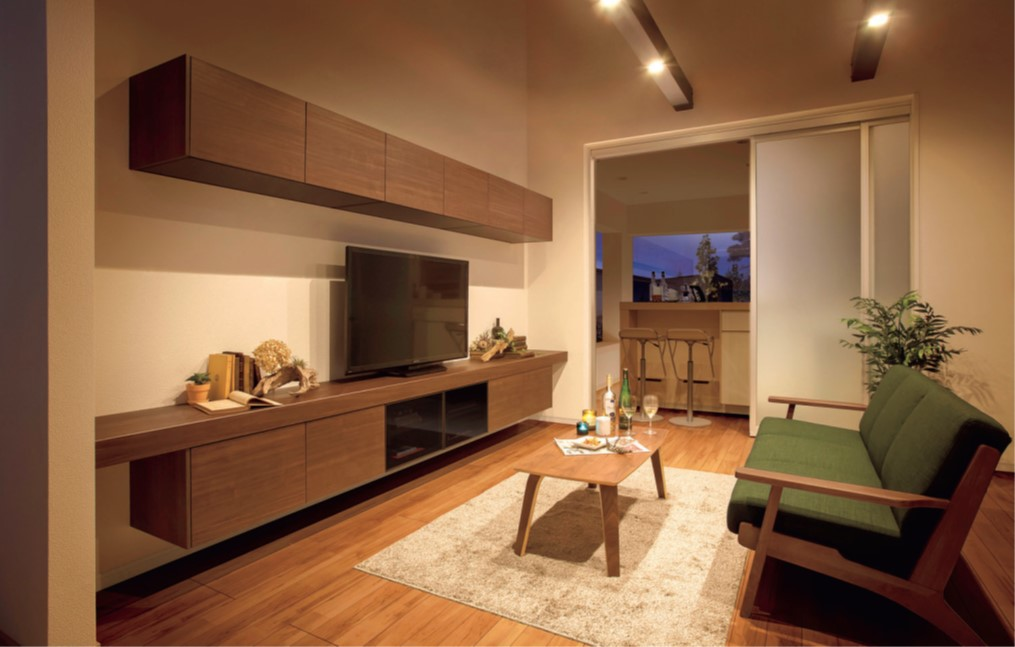
“In Japan, where living spaces are relatively small compared to Europe, storage furniture plays a particularly important role.
“Therefore, we have developed and marketed a variety of storage solutions, including adjustable shelving systems, and now hold the top market share in Japan.”
The company recognised the potential of using plantation timber in Indonesia at an early stage, specifically low-density lightweight falcata wood – Albizia falcataria (L).
“Lightness is important and our product brings differentiation from others in the market. It is being accepted in the market.”
Nankai already had links with Indonesia, as it had bought plywood in the past from the country. So, it set up operations in Indonesia and embarked on a gradual shift to source its panel products, based on falcata core, from the country.
Nankai’s Indonesian operations now consist of the Gresik factory close to the second largest city in Indonesia, with a big port for good logistics. This site covers 11ha and manufactures storage materials with a capacity of 6,500m3 per month. The Lumajang factory covers 3.6ha, manufactures 2,500m3 per month of the Nankai Barecore product and has 10.2ha of falcata plantation forest nearby.
Last year Nankai established its third factory in the Jember area of East Java, Indonesia to further strengthen the stable supply system for its core falcata sustainable timber.
The Jember facility, which started operations in September 2025, produces Barecore, plywood, LVL and the NaSFa product. Nankai has further plantation forests in Jonbok and Banaran.
The majority of the Jember Plant’s production is expected to be supplied for non-structural applications such as door cores, window frames, and furniture. Plywood production will focus on proposals for applications such as caravan interior materials, leveraging falcata’s lightweight characteristics and excellent workability.
By producing laminated timber and plywood/LVL at the same site, the company optimizes timber procurement and ensures enhanced traceability in manufacturing.
The opening of the Jember factory was important as it directly involved Nankai in plywood manufacturing again. The products manufactured there are exported not only to the Japanese market but also to overseas markets.
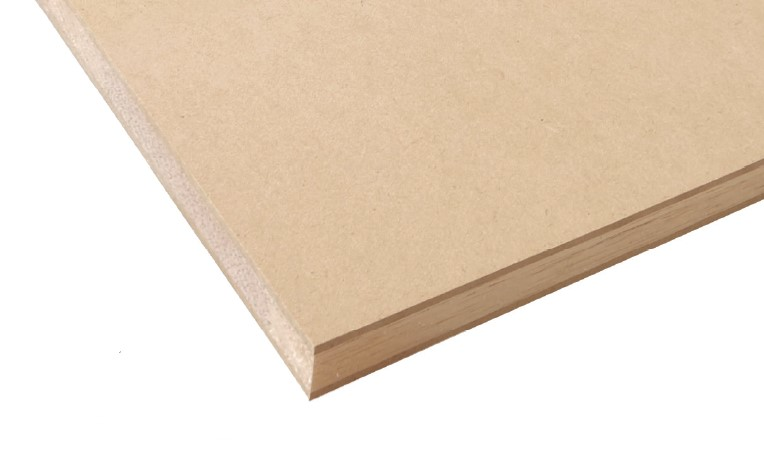
Nankai’s Barecore product is a falcata blockboard panel product consisting of laminated sections of solid falcata wood. The product has a density of 250-350Kg/m3 and is produced in lengths of 2980mm & 4150mm and widths of 1225mm & 1450mm, with 20mm thickness.
The J-Light Board product consists of a falcata core and 2.5mm thick MDF faces (the latter sourced from New Zealand). The latter is seeing strong demand in Japan for adjustable shelving products and has been widely adopted by the Japanese housing market.
The product, which is also used as an interior panel in France, can also be surfaced with decor.
Another product is NaSFa (Nankai Strong Falcata) Plywood, consisting entirely of falcata veneers which undergo a resin treatment process to improve durability and strength.
The NaSFa proprietary processing technology is aimed at unlocking new possibilities for falcata wood. It addresses previous challenges associated with Falcata, such as screw withdrawal resistance and bending strength, and is applicable to both plywood and LVL products.
Technical development is currently underway to achieve stable mass production, with commercial sales targeted for fiscal year 2026.
“Falcata does not have a durable surface, so we spent 4-5 years in R&D developing a resin treatment process for the plywood veneers,” added Mr Oshima.
A patent is pending for the process.
As well as an LVL version of NaSFA, the Jember factory also produces standard plywood products. In all, falcata is used in 95% of Nankai’s products.
FRENCH OPERATIONS
In Europe, Nankai Plywood has also been expanding its operations.
It now operates three plywood factories in France – all acquired by acquisition. The first company – Rolpin – was acquired in 2014 and is situated in the Landes region of southwest France in the heart of maritime pine forests, giving a local sustainable supply of raw material. Its production capacity is 3,500m3 a month of maritime pine plywood.
Rolpin’s products include foil-faced plywood for the concrete forming and truck bed sectors.
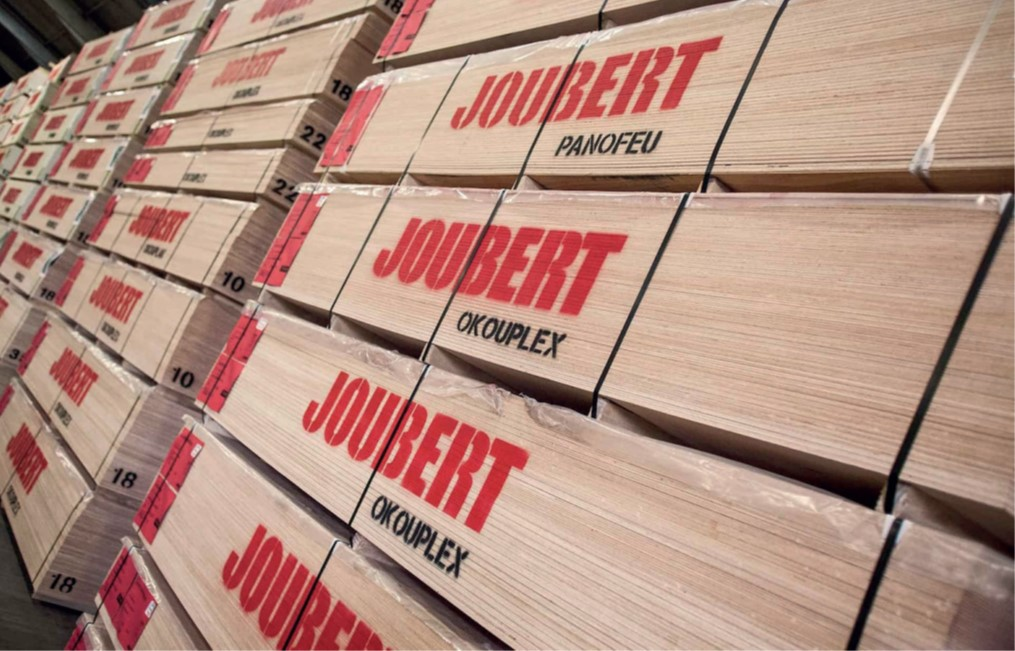
Then last year, Nankai acquired the Joubert Group, which makes FSC and PEFCcertified plywood, producing both generalpurpose and specialty plywood. Its okoumé and poplar products include marine plywood made from okoumé for ship fit-outs, plus fire retardant products.
Joubert operates two factories in the Aquitaine region of western France and a peeling site at Port-Gentil in Gabon, Africa, with a total annual capacity of 80,000m3.
Joubert is a high value-added manufacturer with strong brand recognition and a broad customer base spanning 30 countries worldwide, although its prime markets are France and the Netherlands.
The acquisition allowed both companies to merge their expertise and create a global leader. The partnership also preserves the shared heritage and values of both groups, which are centred on product excellence and environmental stewardship.
Through these strategic investments, Nankai aims to increase the ratio of overseas sales to approximately 40% and establish a solid foundation for sustainable growth. The decline in housing starts and population in Japan is another reason for a global outlook.
The Group will pursue synergies in both sales and manufacturing, such as expanding sales of NP Rolpin products through Joubert’s brand strength and distribution network, as well as considering joint production of poplar plywood and composite plywood.
“In overseas markets, simply offering the same products and solutions as those in Japan is unlikely to be effective,” explained Mr Oshima.
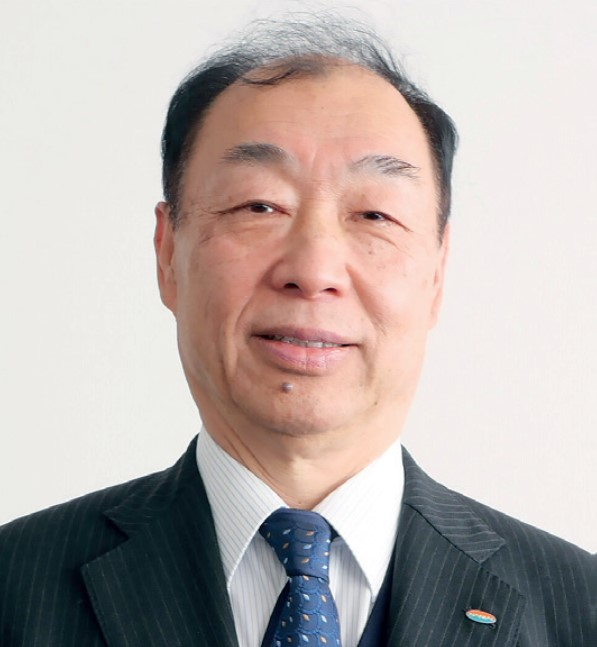
“We believe that proposals tailored to local preferences and sensibilities are essential. Building on our core business of plywood sales as a material, we aim to explore whether our unique solutions and proposals can be accepted in each local market.
“Our overarching theme is the fusion of “Western” and “Eastern” strengths.”
This involves combining the Indonesian production, which features strict manufacturing quality based on Japanese standards, with the sales networks of Joubert and Rolpin in France, essentially creating a global value chain: supplying products made in Asia to the EU, delivering products made in the EU to Asia, and developing high value-added products that leverage materials from both Asia and Europe for markets worldwide.
“As a first step, we will streamline and reorganize our sales networks to fully leverage the synergies among our group companies,” Mr Oshima said.

“As we made significant investments in France and Indonesia throughout 2025, we aim to deliver tangible results from these initiatives in 2026. Building on plywood as our core material, we will further expand our portfolio toward higher value-added products.”
At Rolpin, high-quality Meinan peeling machines and veneer composers have been installed to further enhance product quality and production efficiency.
“While market conditions may not necessarily be favourable, we will leverage our group’s sales network and synergies to make multifaceted proposals and pursue growth from various angles.”
Nankai sees growth potential in the UK, France, Germany, Italy, Spain and other European markets for its Indonesianmade lightweight falcata panel products. The Falcata core / MDF faced product is particularly viewed as a unique proposition.
Its personnel have been visiting supply chain contacts in the countries. In late February it was due to visit the UK for market meetings.
In the UK it has engaged experienced timber industry consultancy Geoff Rhodes Associates to guide its market approach and joined both Timber Development UK and the British Woodworking Federation, as well as appointing Graeme Holburn & Co as its UK & Ireland sales agent.
Nankai is interested in establishing relationships with both distributors and manufacturers, with industries like caravan manufacturing expected to be interested in the lightweight credentials of falcatabased products.
Overall, 2026 is set to be a time of further growth, market expansion and investment for Nankai Plywood as it seeks to use its Far Eastern and European operations to effectively target wider customer markets.


