

In the previous issue’s Technically Speaking column we discussed embodied carbon and carbon footprints, considering how they treated carbon storage. Also, the recent developments in the EU Carbon Removals and Carbon Farming framework, and how it relates to wood products. Many wood products are used for longer than the 35-year threshold value used in the EU’s definition for temporary carbon storage. In particular wood-based panels when they are used in structures. In fact, in the US the storage factor for OSB is higher than that for solid wood!
There is also a lot of current discussion about displacing carbon emissions, or the benefits of substituting high emitting materials with lower emissions materials made from wood. Some call this the substitution effect, while the recent ISO 13391 standard has opted to define a displacement effect. The new standard allows the displacement effects achieved by an organisation’s wood products to be reported alongside other aspects of the carbon dynamics for sustainability reports.
What are these other components? Firstly, the forest carbon balance (increases in carbon in the forest through tree growth, soil carbon etc), then there is the embodied carbon (ie emissions from LCA type calculations) and thirdly the storage in harvested wood products (as mentioned last time). The displacement effect completes the picture, showing the reduction in emissions by choosing wood options. When considered together, the beneficial effect of wood materials can be considerable. The ability to place these values side by side will enhance visibility and recognition.
Yet the displacement effect is relatively unknown in the wood panels sector. Many studies on substitution have compared different building types – for example the emissions related to materials in a timber framed house compared with a masonry house. Wood-based panels are present but not the ‘star of the show’ in these calculations. Yet they should be recognised – timber frame houses use a high proportion of OSB and particleboard. Other studies have demonstrated the effect for mass timber (eg cross-laminated timber) compared with steel or concrete structures; or perhaps innovations like using paper packaging solutions compared with glass bottles for beverages.
Displacement only occurs if the wood is replacing elements that would usually have been a different material. Or if a newer designed product has a different balance of ingredient materials than the old design, resulting in a lower value for the LCA, when compared to the original.
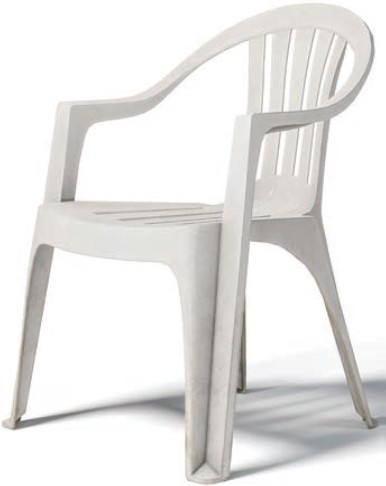
What about the wood panels such as particleboard and MDF which get used extensively in furniture? Here the displacement effect relies on some value judgement about whether the piece of furniture would actually have been constructed from an alternative material. A bookshelf has a high likelihood of always being designed in wood; however, a chair might easily have been considered in a metal and plastic option for example. In which case the wood can be considered to displace the metal-plastic equivalent. One study (by Brunet-Navarro et al. 2021) suggested that for furniture a substitution factor of 0.259 might apply for particleboard, but only a small factor for MDF (0.036), while plywood had a negative value. The benefit of using recycled wood in particleboard (relative to harder recycling in plywood or MDF) probably helped boost the displacement factor for particleboard. Emissions are lower due to the drier feedstock and resource efficiency.
Displacement is an emerging topic, which the wood-based panels sector may choose to rapidly get up to speed on. Displacement factors are likely to change year by year as progress is made to reduce value chain emissions for all products – altering the benefit of choice between product systems. Now is a good time to capitalise on the benefits of wood as a low carbon product.


