

The Japanese wood-based panels’ sector may face tough times in the coming years as generally complex economics in the country, and the ongoing stagnation of the Japanese housing industry put a serious pressure on the industry.
According to latest data of the Japanese Ministry of Land, Infrastructure, Transport and Tourism, housing starts in Japan fell 6.5% from the previous year to only 740,667 units in 2025, down for the third straight year and hitting a 62-year low. The prospects for 2026 are also cloudy, while most analysts expect a further decline.
That negatively affects most of the industries related to housing, including the wood-based panels segment.
Commercial production of composite wood panels in Japan began during the 1950s and has been significantly expanded in the last several decades.
Historically, a significant part of domestic panels output in Japan (along with imports) were supplied for the needs of the construction sector. However, as the demand for new housing in the country is steadily declining (which is also due to a shrinking population), many producers and distributors are considering a revision of their existing expansion plans.
Fujioka Ryosuke, an official spokesperson of SMB Kenzai Co, one of Japan’s leading building materials companies and a leading distributor of plywood and fibreboard, has recently talked about the market trends to the Japanese media.
The dynamics in the Japanese panels sector, he says, largely depends on the situation in the country’s housing sector – the main consumer of panels in the country.
“The demand for panels in the Japanese market correlates with the number of new housing starts,” he said.
“Unfortunately, a further decline in housing starts is expected this year, so we anticipate that the panel industry will also face a challenging year. Naturally, the situation may change if the supply-demand balance is disrupted due to plant shutdowns or other factors.”
The expected drop in demand in Japan this year poses problems to the earlier announced plans of local producers to stimulate a more active use of panels in the domestic market and to expand their capacities.
The Japan Fiberboard & Particleboard Manufacturers Association (JFPMA) was recently quoted in Japanese publication Housing Tribune Online about the plans of the industry and its major players to focus on expansion in new markets and applications for both PB and MDF.
JFPMA said that development of thicker panel products was a development area for the industry. According to representatives of the Association, a particular attention will be also paid for expanding applications to such areas as sheathing and floor underlayment. For this purpose, a special working group within the structure of the Association was established.
According to Masanori Okuda, chairman of the JFPMA (he is also president of Daiken Corporation), the Association continues its work for the expansion of the scope of the use of MDF and other boards in the domestic market.
“We are also working to expand the use of MDF in general buildings, such as for sheathing and underfloor applications. MDF is widely used as a wall underlayment under Notification No. 1541, which is the Japanese construction standard,” he told Housing Tribune Online.
In addition, there are also plans for the beginning of more active use of boards in frame wall construction and other nonresidential construction in Japan. Earlier, revised regulations for shear walls came into effect in the country, allowing 9mm thick particleboard and MDF to be used in highpower shear walls, boosting their presence in the shear surface materials market.
In the meantime, according to the Association, the established Working Group is working to develop 18mm thick PB and MDF shear walls in non-residential construction.
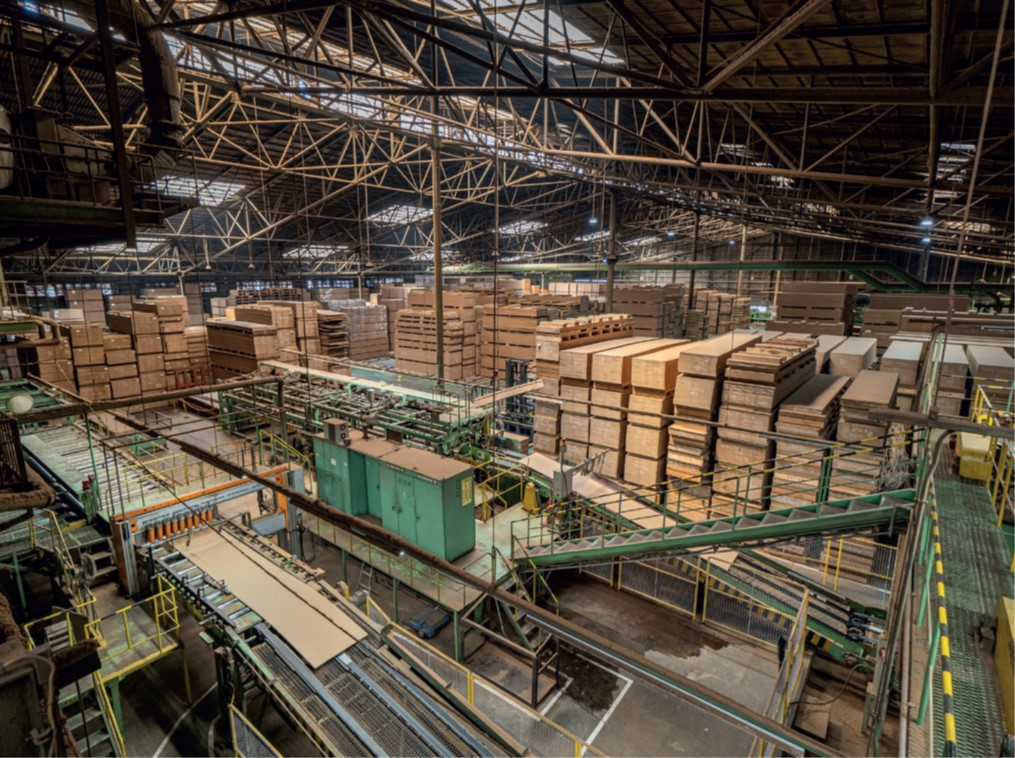
Factors that are making things harder for Japanese panel producers include not only the declining demand for housing and lower population trends, but also a sharp rise of prices for most of raw materials, including oil.
These factors already affected production output in Japan, which, according to data of the Association and some independent analysts has already declined by at least 10% since 2023.
But the Association hopes the beginning of more active promotion of the environmental advantages of boards to environmentally conscious businesses may create conditions for the further growth of demand for them along with their sales in the market.
Meanwhile, according to a study conducted by the international research agency IMARC Group, MDF currently remains the most promising segment in the Japanese board market. In 2024 it amounted to US$1.61bn sales on the Japanese market. While the official results for 2025 have not been disclosed, most analysts expect the growth of the market in the 5-6% range.
In general, analysts expect the Japanese MDF segment will reach US$2.65bn sales by 2033 with the annual growth rates of about 5%.
Domestic manufacturers of MDF include Hokushin (the first company in Japan to produce MDF), Noda, N&E, Daiken and Sumitomo Forestry. Some of this production via operation of production facilities overseas.
In the case of Daiken, one of the leading local players, the company is focusing on developing new MDF materials at its production subsidiaries in Malaysia and New Zealand. So far, it has achieved some progress. For example, in the case of MDF, the company has developed a technology to make adhesive from bark, which was previously discarded, and hopes to start mass producing of MDF using wood-derived adhesives in 2026.
Daiken currently operates four MDF factories – two in Malaysia and two in NZ, with a total production capacity of 550,000m3. It also operates several facilities in Canada, with other products including MFC, insulation boards, LVL as well as a number of other products. Its global annual turnover in 2025 was €1.4bn, with an approximate operating profit of €40m.
In response to rising prices for raw materials, Daiken has postponed the construction of a wood board factory planned in Asahikawa, Hokkaido. This is due to the sharp rise in steel prices used for building construction, which would nearly double the original project cost.
The company also acquired a Malaysian tree plantation company with the aim to double the amount of locally managed plantations and utilize planted trees to manufacture wood boards.
Last year Daiken Corporation finally acquired Malaysia’s WTK Reforestation SDN BHD in a move to strengthen its supply chain and pursue product quality and price stability. WTKR specializes in the cultivation of plantation trees such as falcata and acacia. By acquiring WTKR, Daiken Corporation will be able to source the timber needed for the company’s MDF manufacturing from its own plantations.
In the meantime, representatives of another major player – Hokushin – has made some recent commentary on its website about economic dynamics relevant to the wood-based panels sector.
“In the housing industry, we expect the domestic economy to recover due to improved employment conditions and rising wages,” it said.
“However, the impact of geopolitical risks on the domestic economy remains uncertain. Concerns about rising housing prices and mortgage interest rates are also growing, and we expect the number of new housing starts to remain sluggish.
“Given these circumstances, we will consider expanding MDF sales in existing structural markets and develop and expand sales of new products for non-residential markets.
“This fiscal year, we are also preparing for mass production of PANECO board M, which uses discarded clothing as a raw material, and are currently working on prototyping. Going forward, we will strive to reduce manufacturing costs through further streamlining production and delivery efficiency, while also promoting quality improvements.”
Many analysts and producers expect the Japanese panels market will ultimately grow in the coming years. An acceleration of construction activities including in the nonresidential sector – where future prospects remain better – is forecast.
Sustainability will remain one of the key trends of the Japanese board industry, as consumers and businesses will continue to give a preference to environmentally friendly products.
These include the use of recycled wood fibers, low-emission adhesives, and energyefficient production processes. Furthermore, due to the ever-growing demand for wooden construction in Japan, boosted by the decarbonization megatrend, an interest in the use of boards in non-residential construction will also continue to grow.


