

In this report last year, WBPI signalled that 2025 in all probability would see some growth in the OSB sector.
Market sentiment at the moment suggests that is likely to be the case, notwithstanding the continuing challenging economics and uncertain geopolitical situation currently.
2025 European OSB production forecasts from the European Panel Federation (EPF) will not be released until June at the EPF AGM in Berlin, when the official 2024 European OSB production figures (EU27, UK, EFTA regions) will also be released.
Slight improvements in demand and production are the most likely scenario for the 2024 stats and 2025 forecast.
In terms of new capacity developments – the main focus of this report – there is news of new OSB mill plans in Chile and Kazakhstan, while several plants have been completed in China and one in Ukraine. Several OSB capacity expansion projects have also been completed in Europe. There is not much activity on the new mill front in Europe outside of Russia, with information on the latter harder to verify due to the ongoing war in Ukraine.
This report deals principally with market dynamics and production capacity investments and changes, focusing on Europe and the Rest of the World, namely Asia, South America, the MENA region and Oceania.
At the end of 2024, we estimate OSB installed production capacity for these regions at 17,863,000m3, with the European portion (including Russia, Ukraine and Belarus) at approximately 11,403,000m3 (up just over 1 million m3 compared to 2023).
Our North America Focus on OSB – preceding this report (pp12-21)– has already outlined the situation with North America, showing an installed 2024 capacity at 23,896,000m3.
So, total combined world OSB installed capacity we estimate at approximately 41,759,000m3.
In China, it is important to point out the popularity of hybrid panels featuring OSB cores and PB faces. It is a difficult product to categorise, as the OSB part is only a portion of the board and specific output of the different layers is not broken down precisely.
EUROPE
In Europe, the EPF’s most recent annual statistics for OSB are for 2023 when OSB was the sole panel product area that saw production growth in the EU27/UK/EFTA region at +2% to 6.6 million m3 (2022: 6.5 million m3). EPF’s forecast for 2024 was a production of 6.741 million m3, (+2.2%). Note these figures relate to production, not capacity and are for EU27 countries (whereas WBPI statistics include additional countries).
The EPF consumption rate for 2024 was forecast at 5.625 million m3.
Looking at the financial results for some of the major European OSB producers is a useful exercise. West Fraser’s full 2024 results show its European Engineered Wood Products (EWP) segment recorded adjusted EBITDA of US$8m (2023: US$46m)
The company expects – in Europe and the UK – a relatively modest market recovery over the near term. Looking further out, it continues to expect demand to grow over the longer term as use of OSB as an alternative to plywood grows. An aging housing stock is also expected to support long-term repair and renovation spending and additional demand for our wood building products.
It highlighted the stabilisation of inflation and beginning of a decline in interest rates as positive for housing demand. Ongoing geopolitical developments and the lagged impact of prior inflationary pressures could adversely impact near-term demand, it added.
European and UK OSB shipments are expected to be 1.0 to 1.25 billion square feet in 2025 – a slight increase.
Fellow OSB producer Egger saw its sales for the first half of the financial year 2024/2025 down 0.2% to €2.1bn, with EBITDA at €320.3m, a 7% improvement compared to the previous year.
It described a stable development in business despite a challenging environment.
The product area for wood construction and flooring, which generated unconsolidated sales of €351m, was down 9.4% compared to the previous year, impacted by the downturn in the construction industry, particularly new residential construction.
Egger is remaining cautious for the second half of its 2024/2025 financial year due to challenges posed by the global crises, weak markets, continued subdued demand in the construction sector and the resulting price pressure.
German federal statistics show a 4.1% OSB production growth to 1.213 million m³ in 2024, approximately 50,000m3 more than 2022 and 2023. The value of that production dipped slightly in 2024.
One European OSB producer told WBPI that demand for OSB had picked up during April and it felt the improvement was likely to continue in Q2. January was not as good as it expected, but February and March had shown some improvement, continuing into April.
“We are selling everything we make, but prices have been bumbling along the bottom across Europe for the past 12 months,” the contact said. “The only way is up, it’s just a question of when.
“All European manufacturers are putting their prices up and we are likely to see a decrease in volumes coming to the UK, particularly if Germany picks up,” he said.
Contacts on the important UK market predicted OSB demand and prices increasing.
“That price increase is desperately needed,” one trader told WBPI.
“OSB volumes are currently only fractionally up on 2020, and I believe the only way is up.”
If the UK government’s push for more housing is realised, even 100,000 to 150,000 units will lead to increased demand for OSB.
PROJECTS
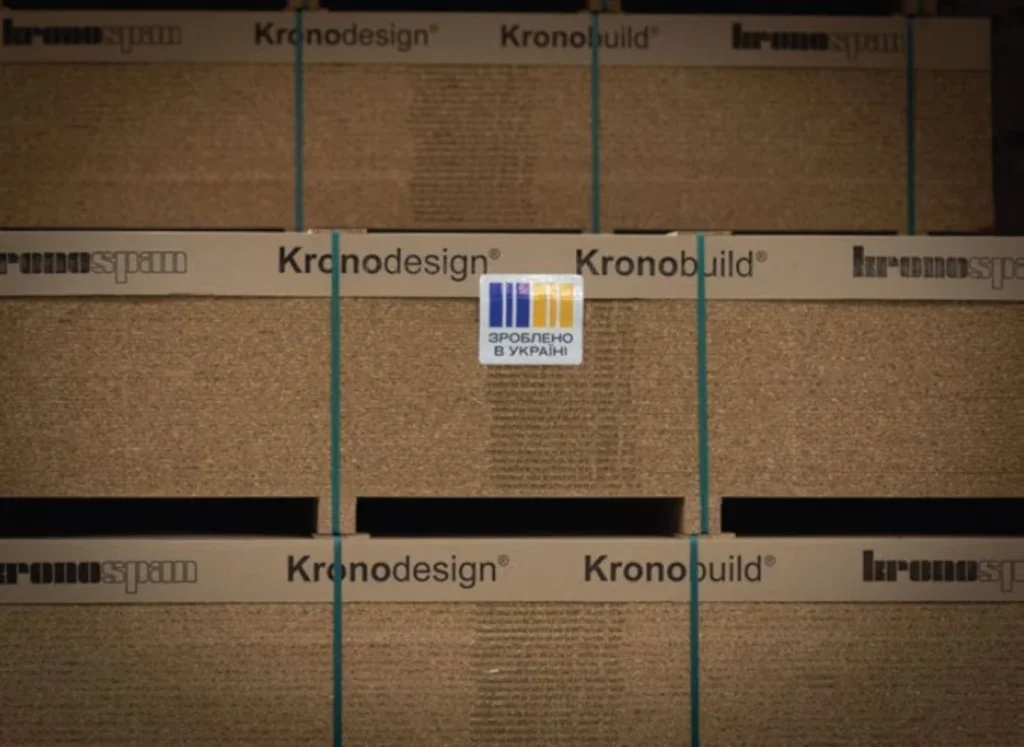
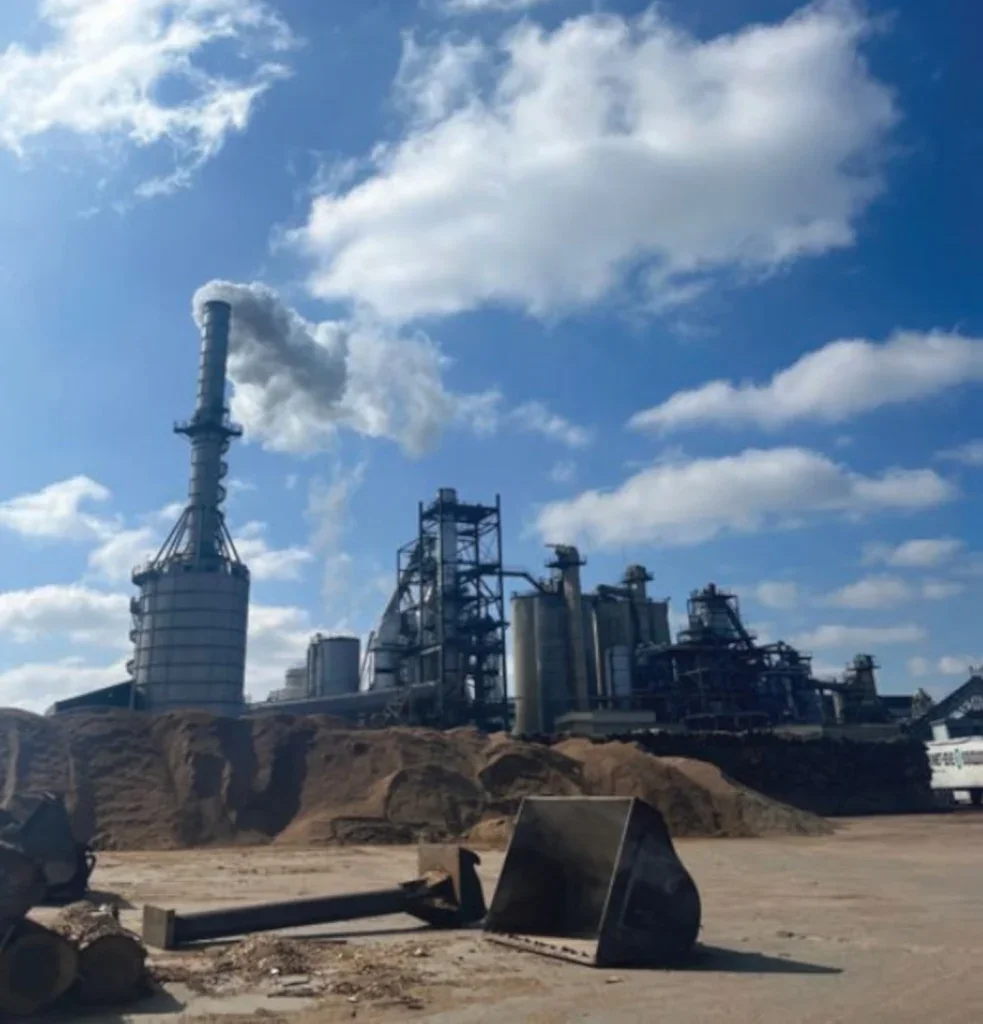
Moving on to capacity developments, we start with the news that Kronospan started production at a €200m new OSB mill in Rivne, Ukraine at the end of 2024.
The new plant, which follows an earlier particleboard facility investment at the same location, has the capacity to manufacture 700,000m³ of OSB panels annually. Approximately 60% of these panels will be exported to key markets in the EU and the US.
The investment is part of a larger commitment to the Rivne plant, totalling €563m, demonstrating Kronospan’s dedication to expanding manufacturing capabilities and supporting Ukraine’s economic growth.
The project originally started in 2018, with machines and components delivered by Dieffenbacher in 2019. Its scope of delivery included the forming station, forming line, CPS+ press, the whole finishing end, and the plant’s electrics and automation. The project was already delayed for several reasons before the war in Ukraine, with the latter also complicating matters.
Yulia Svyrydenko, First Deputy Prime Minister of Ukraine, visited the plant as part of an official recognition of the start of production.
“Who invests during a war?” she said. “It’s a question often posed by those who haven’t witnessed Ukraine’s determination to overcome adversity. Companies like Kronospan offer a powerful answer.”
Kronospan is also investing at its Tortosa site, adding an OSB mill where it has previously started particleboard production. The expected completion is in 2025-2026, so we would expect an update in the near future.
The €150m investment, which will utilise recycled wood, will give an estimated capacity of 360,000m3.
The project serves to underline the prominent role Kronospan is playing in woodbased panels mill development. The Group has more than 50 mills worldwide and a workforce of more than 15,000 employees.
Swiss Krono has been expanding several of its existing OSB mills in major investments.
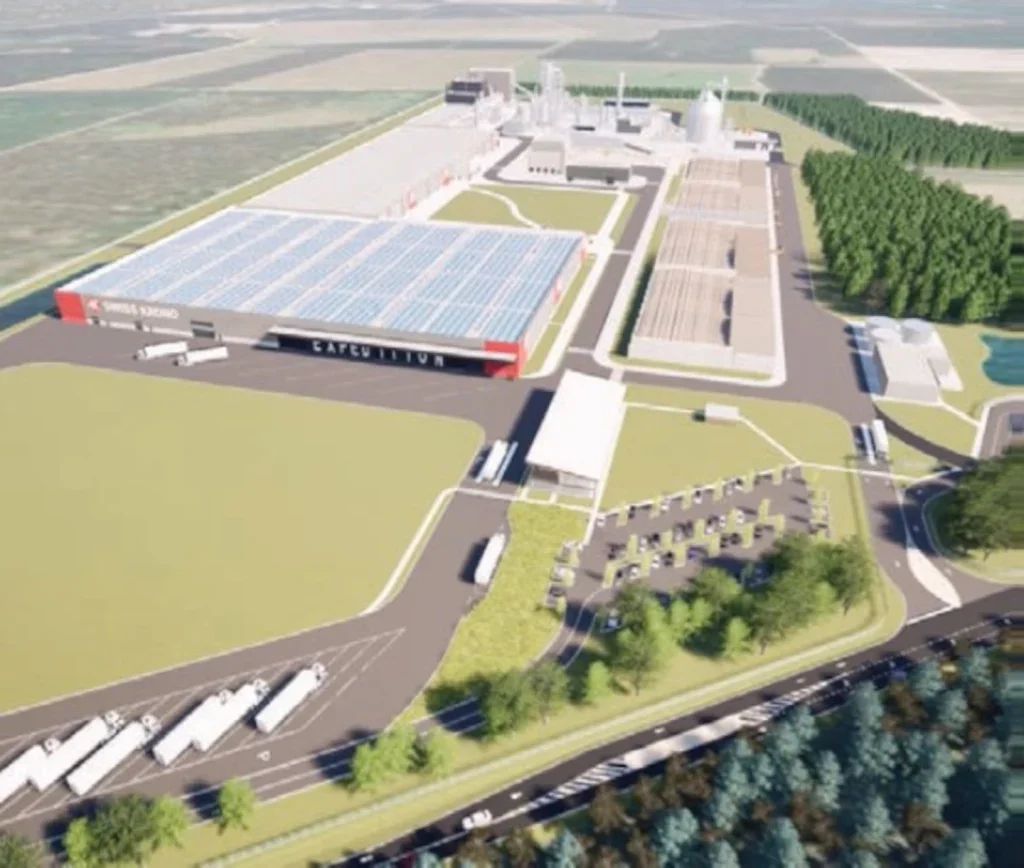
We can report that expansion and improvement projects at Swiss Krono’s Sullysur- Loire in France and Vásárosnamény in Hungary have been completed.
The former expansion adds approximately 150,000m3 to the plant’s capacity, while the extension at Vásárosnamény adds about 250,000m3.
Contractor SGS Industrial Services confirmed completion of the Hungary project, saying it took 11 months and included the mechanical assembly of a drum dryer, the wet chip bunker, the energy system, screening area, as well as the machines for wood processing and the expansion of the continuous press.
The existing combustion chamber from 2015 has been also dismantled and reassembled during the same period.
Swiss Krono’s OSB plant in Zary, Poland is also being expanded, while an earlier investment saw the Heiligengrabe factory’s capacity increased.
The Group’s plans also involve new greenfield OSB production plant investment in western Europe.
It has been exploring a new OSB mill development the Lot-et-Garonne region. A website for the project – Orpinia – is operational and meetings have been held. RTE is also leading the project to connect the plant to the electricity grid.
Industry news publication EUWID has recently reported that Swiss Krono is no longer pursuing the project for the time being.
A preliminary consultation on this project was held from September 2 to October 18, 2024, under the auspices of the National Commission for Public Debate (CNDP).
Following the preliminary consultation, Swiss Krono and RTE decided to continue their dialogue with local residents and stakeholders by initiating an ongoing consultation process.
When first unveiled, the project was planned as a first phase €340m investment in a 420,000m3 capacity, increasing to 600,000m3 in a second €52m phase.
The last public announcements on the project were following the online posting of the assessment by the guarantors of the ongoing consultation and the project owners’ report, the CNDP, at its plenary session on February 5, 2025, when consultation was said to be ongoing until a public inquiry.
An April project press release said the underground electrical connection to “connect the future Swiss Krono plant to the Nérac substation”, was approved by the Prefect of Lot-et-Garonne, Daniel Barnier, on March 21, 2025.
Another item of news for Swiss Krono is a new product launched in 2025: Magnumboard OSB // HybridWood, comprising solid Magnumboard OSB ceilings, combined with reinforced concrete ribs for large spans and various visual finishes.
Turning to Russia, a whole collection of OSB projects have been planned in the last few years, but solid information on their progress is hard to come by. These projects remain in the list of future capacity until their status can be confirmed.
One new project to report is Bazis LLC’s investment project for OSB and sawn timber in Lesosibirsk, in the Krasnoyarsk region. The Russian Forest National Association of Timber Industry have said the Rub8.5bn investment would be completed in 2030.
The OSB mill is planned with a 300,000m³ capacity.
ASIA AND REST OF THE WORLD
Looking further afield, a Kazakhstan OSB plant is on the drawing board. Domestic news source The Astana Times reported the project for the production of OSB and laminated wood chipboards by Ultradecor Trading Kazakhstan LLP in the North Kazakhstan Region. It will bring US$155.3m of investments to the economy.
Kazakh Invest has introduced a targeted approach to attracting investments, focusing on four priority sectors: deep processing of grain, coal chemistry, petrochemistry, and production of oil and gas equipment. As well as Ultradecor, other projects involve partnerships with prominent companies such as CHN Energy, Carlsberg and PepsiCo.
A machinery contract has been awarded to Chinese press supplier Yalian, which will supply a 52.3m x 8.5ft press, with a 2,000m3 per day capacity.
In China, WBPI has reported on multiple OSB or hybrid OSB plant projects in recent years. The most recent Asia projects we have covered are from Luli Group in China which completed its third and fourth fine OSB plants from Dieffenbacher in Jiangxi and Hunan. The former started operation in December 2023 and the latter in January 2024 (now added to the main listings).
Dieffenbacher has also confirmed two other projects – Guangxi Deli New Materials in Yulin and Baoding Tianzelin Board Industry at Baoding were completed last autumn, with the former having a 500,000m³ annual capacity and Baoding having a 550,000m³/ year capacity. Both lines can produce OSB and Fine OSB. These projects have also been added to the main listings.
A further project in Asia is IMALPAL GROUP’s project to supply a complete OSB line with a 30m continuous press to a customer in Vietnam with a 250,000m3 / year capacity. Commissioning was originally planned for 2025 and we await more details on progress.
We have also previously reported on the Fletcher Building Ltd project in New Zealand. It was originally due to be completed in late 2024/early 2025. Start-up is now planned for summer 2026, and capacity will be 130,000m³/year. Dieffenbacher is the press supplier on this project also.
The project is taking place at the Laminex New Zealand site in Taupo. Laminex New Zealand runs a particleboard mill in Taupo, North Island.
The new CEBRO plant will have the flexibility to produce Fine OSB and conventional OSB. It will replace the particleboard production line featuring an almost 50-year-old single-opening press supplied by Dieffenbacher in 1974.
CENTRE FOR INVESTMENT
In South America, Chile is turning out to be a centre for OSB investment.
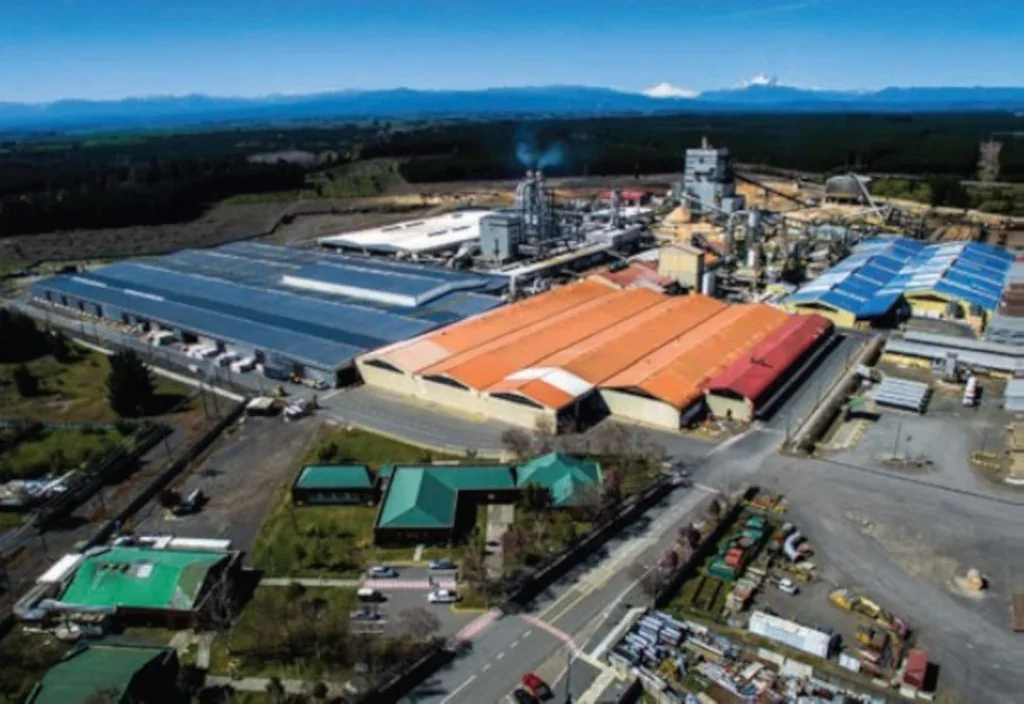
In November, 2024 Dieffenbacher announced it had won a contract from Paneles Arauco SA (Santiago de Chile) to convert one of its two Trupan MDF lines in Cholguán in the Bío Bío region to making OSB.
The plant, with an estimated planned capacity of 300,000m3 is scheduled to start production in the second half of 2026.
“It’s a special project for us, not only because we are happy to be working with our friends at Arauco again, but also because we will be building the new plant around the existing 10-opening press from 1988, which will remain at the centre of the production line,” said Diego Coelho de Oliveira, area sales director and managing director of Dieffenbacher do Brasil.
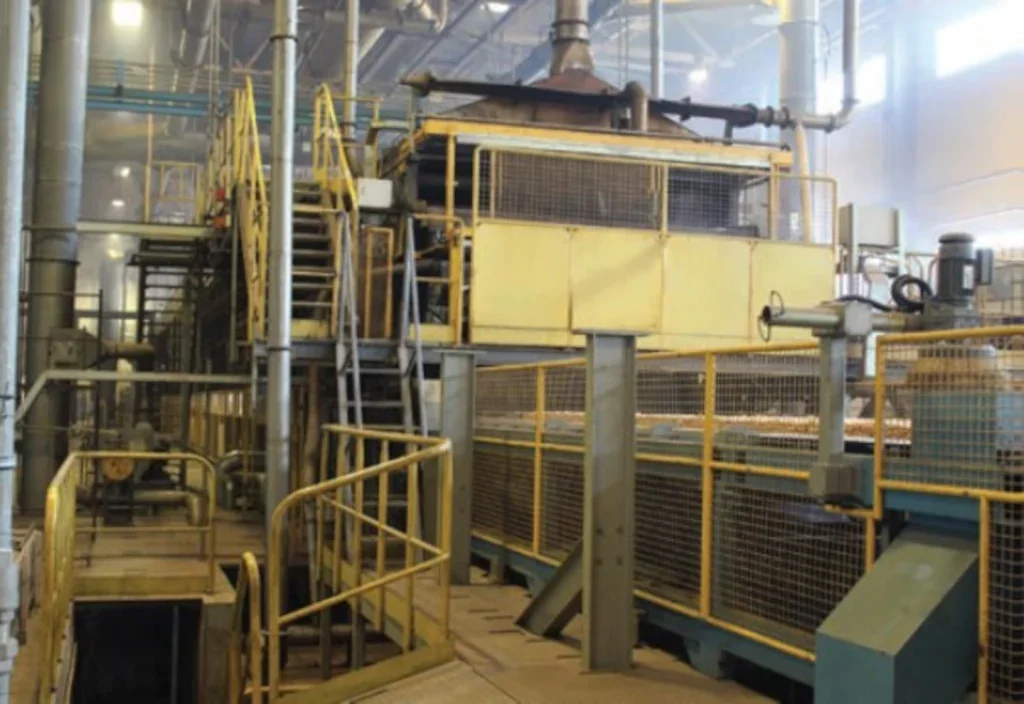
The Dieffenbacher scope of supply will range from the wood yard with debarking to the raw board handling including pneumatic systems and plant electrics and automation. A belt dryer is being supplied.
Another potential project to look out for is a second OSB line for Chile Panel SA, which according to EUWID is considering a project. We will wait to hear more before adding this to the future capacity list.


