

During 2024, the North American oriented strand board (“OSB”) industry stabilised at better profit margins than prevailed prior to the pandemic. Higher product prices during the first half of 2024, combined with flat operating costs, led to improved operating margins compared to 2023, even if lower than the boom years of 2021 and 2022.
Seven new OSB mills across North America had been announced as of early 2024. Tolko began production at its Alberta facility during May and Roy O Martin finished its second Texas factory in June. The big Huber mill in Mississippi continues apace and should be completed by early 2026. The remaining four announced mills have not yet broken ground.
In other notable news, Weyerhaeuser will build a greenfield laminated strand lumber (LSL) mill in Arkansas. LSL is an engineered lumber based on OSB process technology. This plant should start up in 2027.
Continued good times during 2025 are uncertain. Reputable economists believe that promised policies of the second Trump administration regarding tariffs on Canadian forest products, undocumented immigrants, and interest rates may adversely impact the US housing market and related demand for OSB. Canadian makers that rely on the US market could especially feel the pain.
2024 HOUSING STARTS MODESTLY FELL AS HOUSING REMAINS EXPENSIVE
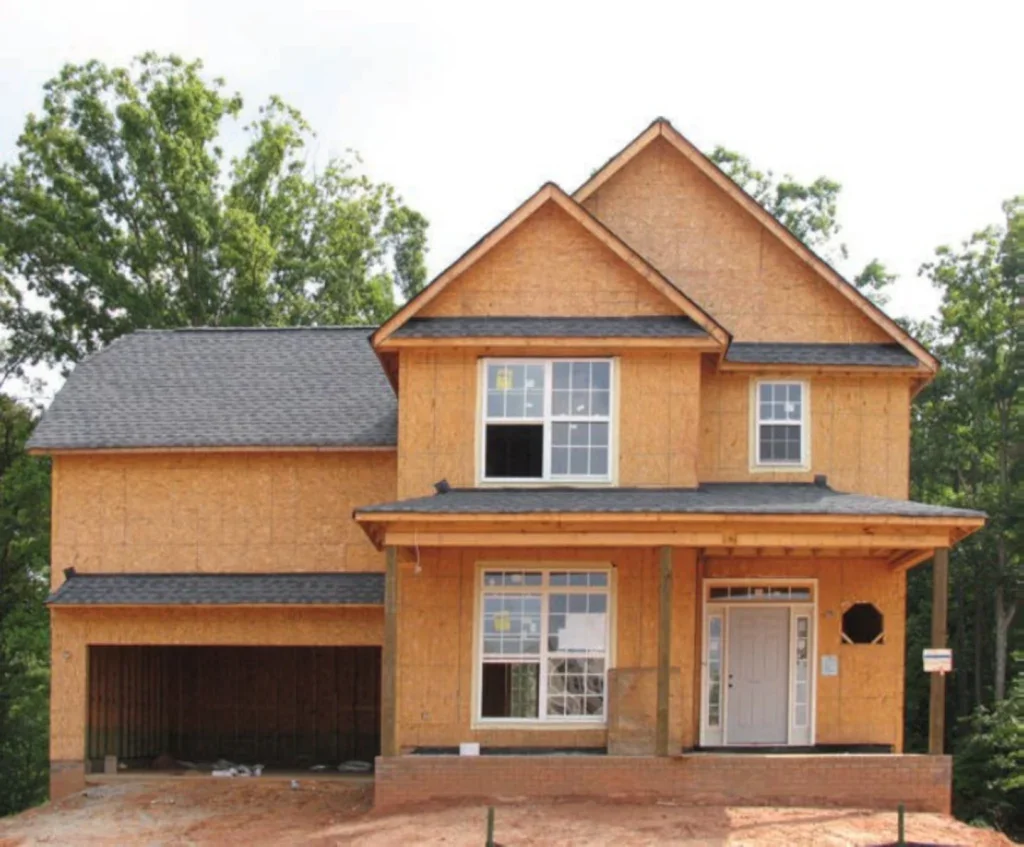
After peaking at 1.88 million units in 2021 following 15 years of slow recovery since the 2008 recession, North American housing starts have trended down. North American housing starts fell to 1.59 million units in 2024 from 1.64 million in 2023 and 1.79 million in 2022. During 2024, US housing starts fell 54,000 units while Canada achieved 4,000 more starts.
While methodologies to estimate the US housing deficit differ, the expert consensus is that a shortfall of about 3 to 4 million units has accrued since the US housing bust of 2008 and the associated global recession.
The economics team of the investment manager First Trust Advisors wrote: “The home building sector seems strangely slow given our population growth and the ongoing need to scrap older homes due to disasters or for knock-downs. We think government rules and regulations are likely the major hurdle for builders in much of the country, but home construction might also be facing headwinds from a low unemployment rate (which makes it hard to find workers) as well as relatively high mortgage rates.”
Mortgage interest rates during 2024 for the most common mortgages (25-year loan with a fixed rate for five years in Canada and fixed rate for 30-year loan with a fixed rate for 30 years in the US) fell less than expected. A year ago, the National Association of Realtors (NAR) had predicted that the 30-year fixed rate mortgage would average 6.3% in 2024, but US mortgage rates never fell below about 6.5% in 2024.
“Mortgage rates have refused to budge for several months despite several rounds of short-term interest rate cuts by the Federal Reserve,” said Lawrence Yun, chief economist at NAR. “When combined with elevated home prices, housing affordability remains a major challenge.”
NAR calculates that seasonally adjusted existing-home sales fell by 5% in January 2025 compared to December 2024. Higher mortgage payments compared to unchanged family incomes plus worries about personal job security have caused middle-class home buyers to hesitate. Starter home sales have slowed down more than upscale housing because potential first-time purchasers are especially impacted.
Canadian mills consistently supply almost 30% of US demand for OSB. In turn, about 65-70% of Canadian OSB production is normally exported to the US. 2024 was no exception to this international trade pattern.
The US also imports minor OSB volumes from the European Union (Latvia, Romania, and elsewhere). Since Russia’s 2022 invasion of Ukraine, the US no longer imports OSB from Russia or its ally Belarus.
OSB PRICE AND PROFIT DEVELOPMENT
Three publicly traded forest products manufacturers (Louisiana Pacific, West Fraser, and Weyerhaeuser) make more than half of North American OSB. Because average market prices during 2024 were higher than 2023 and manufacturing costs remained flat, these companies reported good OSB manufacturing segment results. Combined OSB segment revenue grew to US$4.4bn in 2024 compared to US$4bn in 2023 and 2024 EBITDA margin increased to 27% from 23%.
However, 2024 started off better than it ended, with prices in the first half of the year better than the second half. Average second quarter 2024 price of US$456 per m3 of OSB fell by 25% to US$337 per m3 in the third quarter. Market prices partially recovered in the fourth quarter and OSB market prices have remained near 2024 prices through early March 2025.
OSB segment financial results roughly tracked OSB prices during 2024. EBITDA margin peaked at 40% in the second quarter before trailing off to 16% in the fourth quarter. The overall industry continues to perform well as typical OSB margins remain double the pre-pandemic norm.
When asked about the announced 25% blanket tariff on Canadian products, Weyerhaeuser’s CEO Devin Stockfish said: “… on balance, I would expect you’d see prices go up somewhat, at least to the point where the Canadians and Canadian manufacturing sending their product into the US would be margin positive. Otherwise, you would expect capacity to come out of the system. So, I think it would have some upward pricing pressure.”
TWO GREENFIELD OSB MILLS STARTED UP IN 2024; FIVE MORE MILLS PENDING
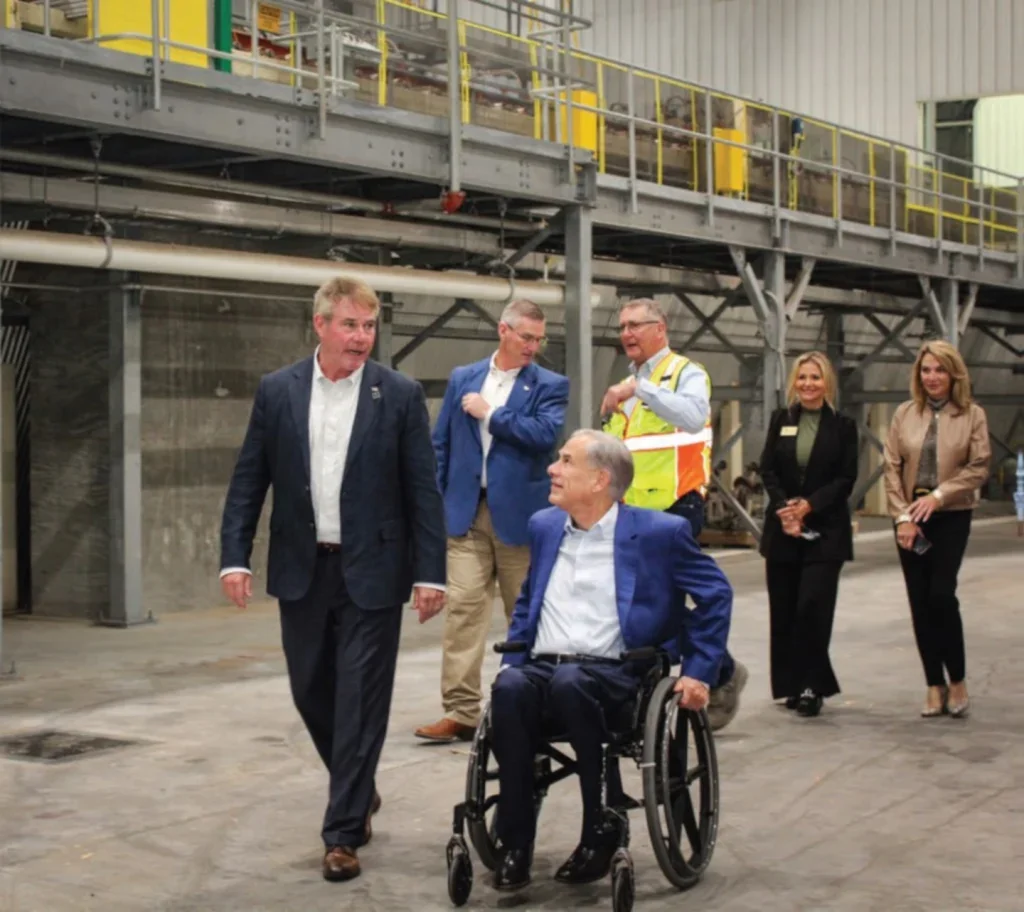
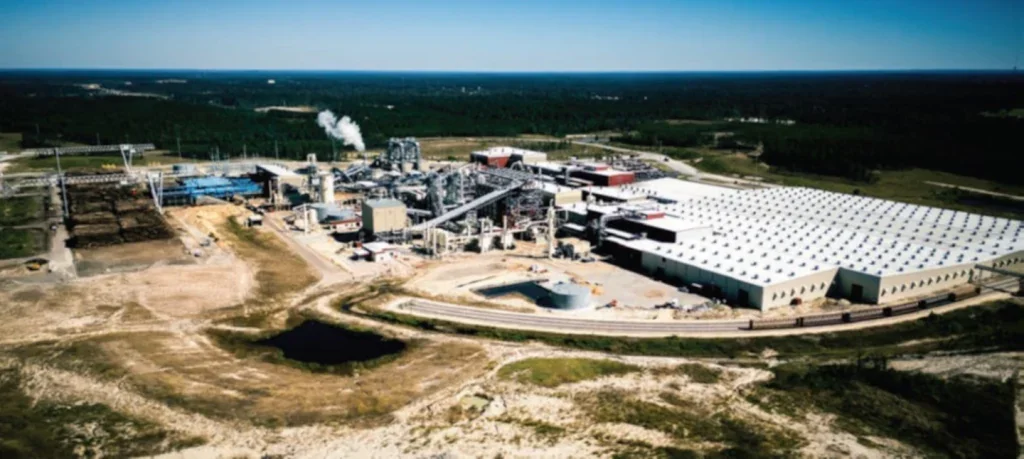
Two large new plants began production in 2024. Tolko’s replacement factory in High Prairie, Alberta started up in May two years after a May 2022 fire. Roy O Martin commenced operations in June at its second greenfield mill in Corrigan, Texas.
At the grand-opening ceremony for the second Corrigan mill on October 30, 2024, Governor Greg Abbott of Texas stated, “[Corrigan’s] expanded manufacturing facility will be the largest OSB facility in all of North America… This US$211m expansion of this facility is an important investment in the future of Corrigan and an important piece in the economy of a bigger, better Texas.”
Equipment suppliers are delivering major machine centres to the greenfield Huber mill in Shuqualak, Mississippi. Initial production may occur during late 2025, with full operation in 2026. The Shuqualak plant will use a multi-opening press, unlike the continuous press that Huber installed two decades ago at its preceding greenfield project in Broken Bow, Oklahoma.
During 2021, the One Sky Forest Products OSB mill was announced for Prince Albert, Saskatchewan. Shareholders include Peak Renewables and local First Nations tribes. Construction had not begun as of early 2025.
Premier Scott Moe of Saskatchewan said in September 2024 when awarding a Provincial timber concession to One Sky: “In Saskatchewan’s Growth Plan, the Government of Saskatchewan set the target of doubling the size of the forestry sector by 2030 and encouraging increased Indigenous participation. This allocation positions the industry to meet that growth target, working with Indigenous businesses and creating jobs for northern residents, further protecting and promoting Saskatchewan.”
Kronospan announced during 2023 an OSB mill for Eastaboga, Alabama. The company already operates MDF and laminate flooring factories at the proposed location. Construction had not started as of early 2025.
Peak Renewables will add an OSB mill to a manufacturing complex in Dothan, Alabama that already includes a cross-laminated timber mill, an adjoining glulam line, and an industrial wood pellet producer. The air emissions permit of August 2024 from the Alabama Department of Environmental Management specifies a multi-opening press. Initial production is not expected before late 2026.

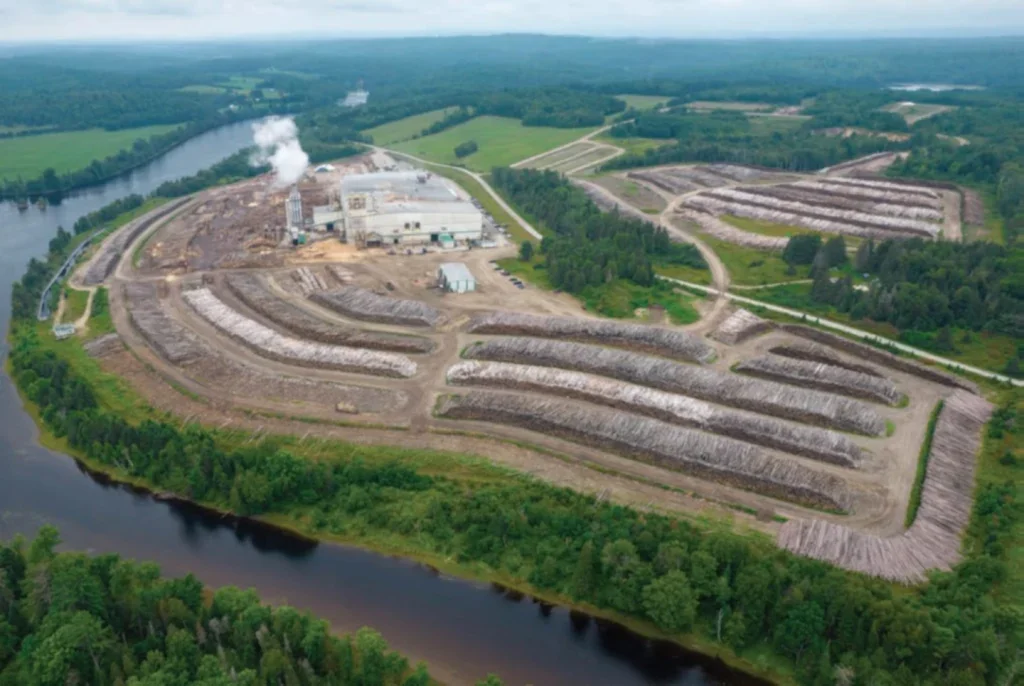
In March 2024, Godfrey Forest Products announced an OSB plant in Jay, Maine on the site of a closed paper mill. Godfrey is finalising financing, environmental permits, engineering, and equipment orders. If construction begins soon, start-up will occur no earlier than 2027.
GROWTH OF RELATED LAMINATED STRAND LUMBER INDUSTRY
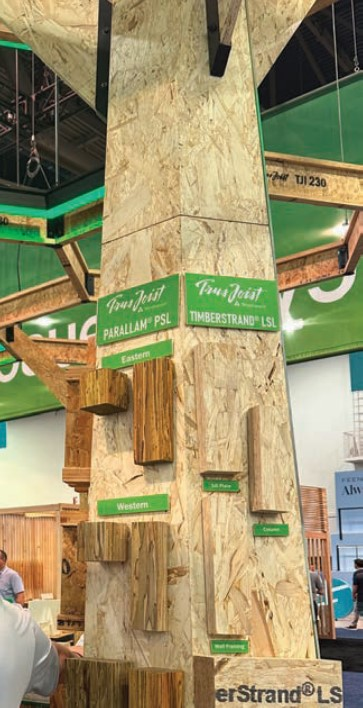
Laminated strand lumber is an engineered lumber based on OSB process technology, but LSL utilises longer parallel strands. The LSL manufacturing process uses a steaminjected press to make thicker dimensionlumber sized billets, while OSB production uses a multi-opening or continuous hot press to make the substitute for structural plywood panels.
Relative to solid lumber and veneer-based products, wood raw material suitable for stranding is cheaper, achieves superior yield, and is more forgiving in terms of size, quality, and acceptable species.
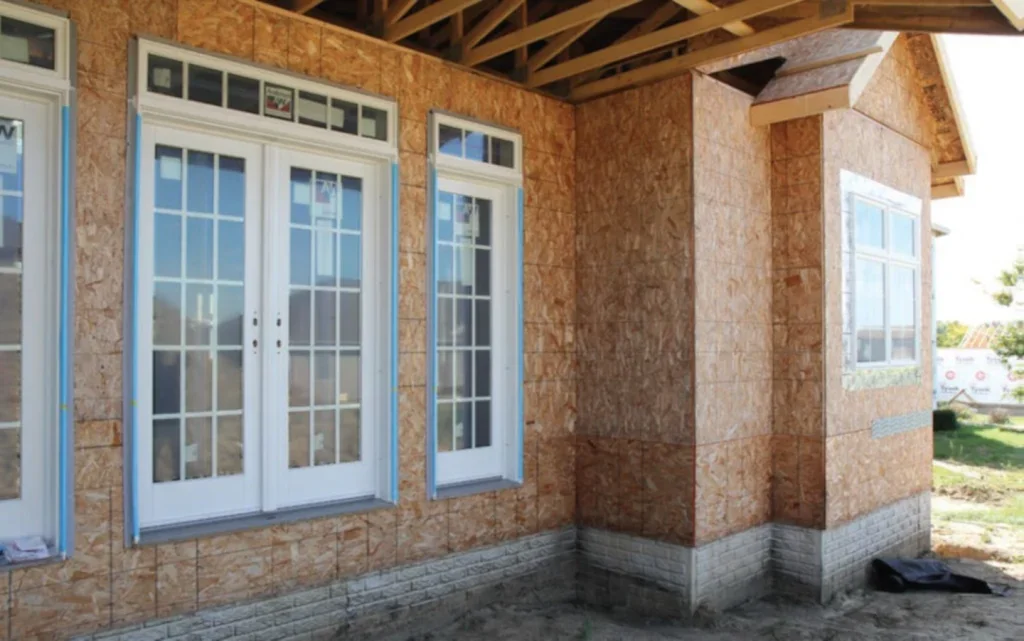
To make OSB, whole logs are converted into strands about 1mm (.03in to .05in) thick, 12mm (about 1⁄2in) wide, and 75mm (3in) long and the strands are laid down in crossbanded layers. LSL specifications slightly differ, with research showing that wood strands about 120 to 300mm (4in to 12in) long oriented on the length axis approximate the strength of solid lumber.
Two North American mills currently make LSL. Weyerhaeuser’s LSL mill in Kenora, Ontario produces the “Trus Joist Timberstrand” brand. Tolko’s OSB mill in Slave Lake, Alberta also makes the T-Tec brand of LSL.
The Tolko plant produces as much highvalue LSL as possible and then converts leftover short strands into lower-value OSB. The Godfrey OSB mill may also manufacture LSL. Relative to a strictly OSB mill, a dual capability factory requires additional investment in strand storage and processing.
In November 2024, Weyerhaeuser announced it will invest US$500m for a greenfield LSL mill in Monticello, Arkansas. The Arkansas and Ontario plants will have similar rated capacities (about 280,000m^3 per year). However, Weyerhaeuser believes that southern yellow pine fibre from Arkansas will result in stronger LSL than aspen fibre from Ontario. The company will supply the new mill from 500,000 hectares (1.2 million acres) of its forestlands in southern Arkansas. Better logs will go to the nearby sawmill and plywood plant, and lower quality wood fibre to this LSL mill.
UNCERTAINTY IN 2025
The impact of President Trump’s promised social and economic policies on the US homebuilding and building materials industries remains unknown. On March 1, President Trump signed executive orders intended to benefit the domestic forestry and wood products industry by easing timber harvest restrictions in national forests and designating wood product supply as a national security concern.
Regarding housing, the Republican Party platform for 2024 promised that Republicans will “reduce mortgage rates by slashing inflation” and also will open “limited portions of federal lands” for new home construction. The party’s position is to promote homeownership through “tax incentives” and “support for first-time buyers” as well as cutting “unnecessary regulations that raise housing costs”.
The economics team at Wells Fargo Bank believes that: “The residential sector is apt to face substantial headwinds this year. New tariff policies will likely increase housing material costs, while tighter immigration policies are expected to slow growth in the construction workforce. Furthermore, elevated new home inventory levels and high mortgage rates are set to remain as obstacles to new construction.”
The Trump administration’s immigration policies could put additional strain on the US housing market. John Sim of JPMorgan Chase wrote in a February 10, 2025, research report: “By reducing immigration and lessening demand, Trump argues that housing costs can be reduced. It’s not that simple, though. Approximately 30% of construction workers are immigrants, so there could be complex implications [if large numbers of undocumented workers are deported].”
Carl Harris, chair of the National Association of Homebuilders, said in a February 1, 2025, statement: “Tariffs on lumber and other building materials increase the cost of construction and discourage new development, and consumers end up paying for the tariffs in the form of higher home prices.”
In early March 2025, the Trump administration imposed the threatened 25% tariff on Canadian wood imports but several days later postponed enforcement until April. Higher taxes on Canadian OSB would adversely impact foreign producers while raising home prices for US consumers.
Housing demand remains unsatisfied. Nevertheless, political and economic unknowns in early 2025 heighten risks that the North American OSB industry’s good economic results will not continue. The possible entry of four announced, but not started, state-of-the-art mills over the next few years also could eventually lower prices.
ABOUT THE AUTHORS
Richard W (Rich) Baldwin, MBA is chief investment officer of Oak Creek Investments (Texas, US), and regularly consults for Asian, European, and North American engineered wood products makers. In recent years, he served as a strategic consultant for several project justifications including Winston Plywood & Veneer (Mississippi, US) and CalPlant I (California, US). Rich was visiting professor at Southwest Forestry University (Kunming, China) and previously worked for two Wall Street firms.
Richard F (Dick) Baldwin, PhD, CF is managing partner of Oak Creek Investments (Texas, US), and an investor in wood and non-wood businesses. In recent years, he served as general manager of Chester Wood Products (South Carolina, US), Moncure Plywood (North Carolina, US), Omak Wood Products (Washington, US), and Winston Plywood & Veneer (Mississippi, US). Dick is instructor in the Forestry Department of Oregon State University (Oregon, US) and author of the 2016 industry primer Plywood and Veneer-Based Products.


